With a Preference for Continuous Improvemet
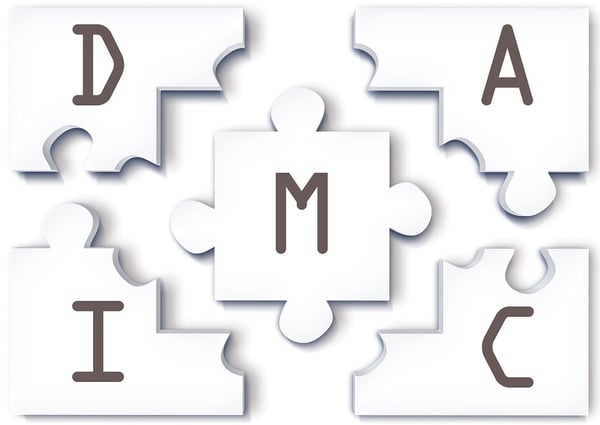
Continuous Improvement is anongoing, long-term approach to improving processes, products and services. It is also called Continual Improvement or CI, and is one of those terms which we often think we fully understand, but can actually mean many different things to many different people. This article gives a simple guide to Continuous Improvement by exploring the following: If you don't fancy reading the whole thing, feel free to click straight to the section you are most interested in. Generally speaking, continuous improvement aims to: Organisations which implement continuous improvement achieve this by making small, gradual improvements over time. As the majority of changes are small, there is often less resistance to change, which is ideal for improvement professionals who wish to: DMAIC is a methodology made up of 5 phases: Define, Measure, Analyse, Improve and Control. These 5 phases ensure that any improvement project is able to be analysed with data-driven evidence and repeated. The 5 Whys were developed to get to the root cause of a problem; not just identify a problem's symptoms. These questions are important for exposing flawed processes within an organisation (The 5 Whys also partner well with DMAIC) The number of Whys can vary but 5 is usually the right number to get to the root of the problem. Here is an example... The customer is unhappy Why is the customer unhappy? (1) The customer is unhappy because n o one responded to her support request Why didn't anyone respond to her support request? (2) No one responded to her support request because she posted it on Twitter Why didn't anyone respond to her tweet? (3) No one responded to her tweet because Alice is on vacation Why does Alice's vacation mean no one responded to the tweet? (4) Because Alice is the only one who responds to tweets and she doesn't have a backup Why doesn't Alice have a backup? (5) Because we never thought about it before Value Stream Mapping is the process of visualising the product pipeline as a series of process connections and measuring the value that those steps brings to the customer. Value s tream maps are used to visualise and identify delays, restraints and excessive inventory within processes. There are three groups within the value stream... For more information on SMART goals please read this article, but I find it most helpful to think of a SMART goal as being the full address of where I want to get to next. This may not be my ultimate objective, but it's where I want to arrive first. So, for example if my objective is to improve my website to help grow my business, just leaving it at that gives me a very vague place to head to – which means I will really struggle to plan a route to get there. If, however, I set my first goal as a 100 new, good fit contacts a month, within 3 months – then I have the a very clear place to head to, and now all I need to do is set up my Improvement Roadmap of what I need to do to get there. (And once I do, I set my next smart goal and so on…) Of course as you start to set up your Improvement Roadmap, you won't know exactly what you need to do to achieve your smart goal – otherwise you would just do it. But you do know that achieving improvement is about making lots of small changes and measuring the results to see if they are taking you towards your goal. If they are, you do more of them and if they aren't, you stop doing them! So where should the ideas for these changes come from? And how should they best be managed? Remembering the 5 crucial elements of an improvement plan, the most effective improvement plans: Building improvement roadmaps which enable the above, is most certainly the easiest and quickest way to implement Continuous Improvement in any organisation. Triaster has been working in the Continuous Improvement space for many years and based on experience and analysis of how the most successful organisations do it, have developed improvement roadmap software which enables all of the above, to best support Continuous Improvement. There is a free 14 day trial; sign up for it now. How do I create a culture of Continuous Improvement? DMAIC Process vs Cycle: Why Process Wins Every Time How to Implement Value Stream Mapping Software in a BPM System The Complete Guide to Continuous Improvement in Business This is an updated and refreshed edition of an article originally written in 2018.
The Aim of Continuous Improvement

5 Crucial Aspects of an Improvement Plan

3 Continuous Improvement Methodologies that are Easy to Understand & Use
1. DMAIC
2. The 5 Whys
3. Value Stream Mapping
The First Steps Toward Continuous Business Improvement
1. Set Smart Goals
Improvement starts with objective setting. Your objective can be anything, but should be broken down into SMART goals.
SMART goals are:
2. Set up an Improvement Roadmap
Some Practical Help

Related Articles:
Related White Papers:
brehmertorrisheacer.blogspot.com
Source: https://blog.triaster.co.uk/blog/what-is-continuous-improvement

Post a Comment for "With a Preference for Continuous Improvemet"